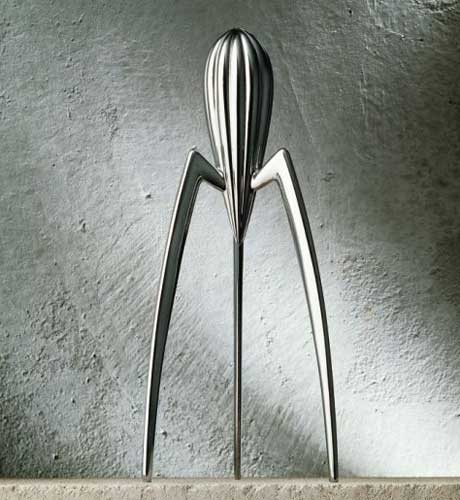
A friend recently purchased Philip Stark’s lemon juicer. It’s an example of an object that appears to be good design due to a slick appeal, even proportions & shape and shiny finish. It would be good to have on display in the kitchen. However, the design is flawed in several ways; it fails to stand, acid from lemons erode the metal coating and the juice does not flow directly into the glass. Good design should not only be aesthetically pleasing it also has to be of benefit to the user. As shown in the Stark example what is the point of design that does not work?
It is quite easy for us as designers to get caught up in the world of beautifully designed things, with font, layout pads and vast colours. However, designers have more power than they realise , they have the power to evoke change as can be seen in the success of Coca Cola. The brands success is not due to its graphic design, but rather a history of clever marketing, 1.2 billion times a day someone reaches for one. In Tanzania, a country battling disease, corruption and poverty, every city and village is branded with the Coca Cola logo. This is branding at its most powerful, but is it good design? Surly it would be better if designers used their power to enforce ideas that could shape people’s lives and force a change for good. Interestingly, the price of a bottle of Coca Cola is the same as an anti-malaria pill.

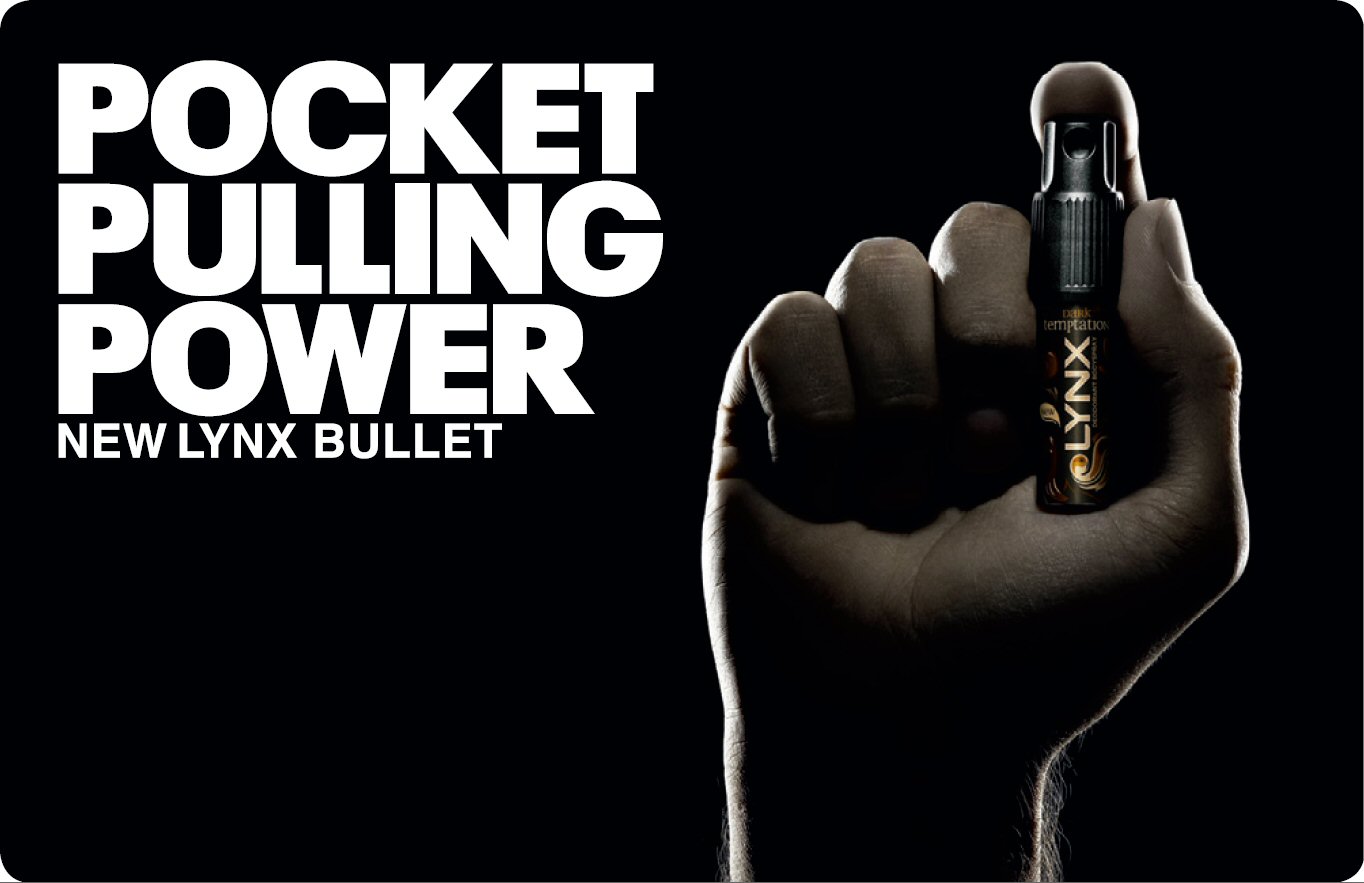
In the world of design where manipulation and exploration is at the heart of work, one wonders if design can ever be ethical. Designer’s design messages and images that cleverly deceive people. Such as Baileys liquor which showcases Celtic imagery on the label, conjuring images of tradition, when in fact it was invented in 1974. This is misleading design. The truth is bent in most adverting so are all ads. unethical? The Lynx guy who gets all the girls or the Special K bar that gives you a slim figure. It can be argued however, that we as consumers have the power to decide whether we need something or not. This can be tricky though when a designer creates a need and want for a product. Surly, good design should be about the product not what is vulnerable in the buyer.
I believe not all design is unethical. Good design can change lives, promote innovation and entertain. For me good design is that which solves problems and creates a positive change. Sometimes the most successful designs solve the simplest of problems such as the vegetable peeler or the Lifestraw (a water filtration device, used in countries where it’s hard to find clean water). I also think good design is that which is sustainable. We as designers have a duty to not only create eco products but also send out the message that we need to act more sustainable.

It is important that design looks appealing as it needs to catch our eye, but it needs to fulfil a purpose and in a non-manipulative way. It also needs to be sustainable and enforce change. For me this is good design a mixture of elements. This topic fascinates me which is why I have chosen it for my dissertation topic. I often wonder if there can be such a thing as ‘good' or ‘bad’, I think philosophy and design are heavily linked. That question is for another blog entry.

No comments:
Post a Comment